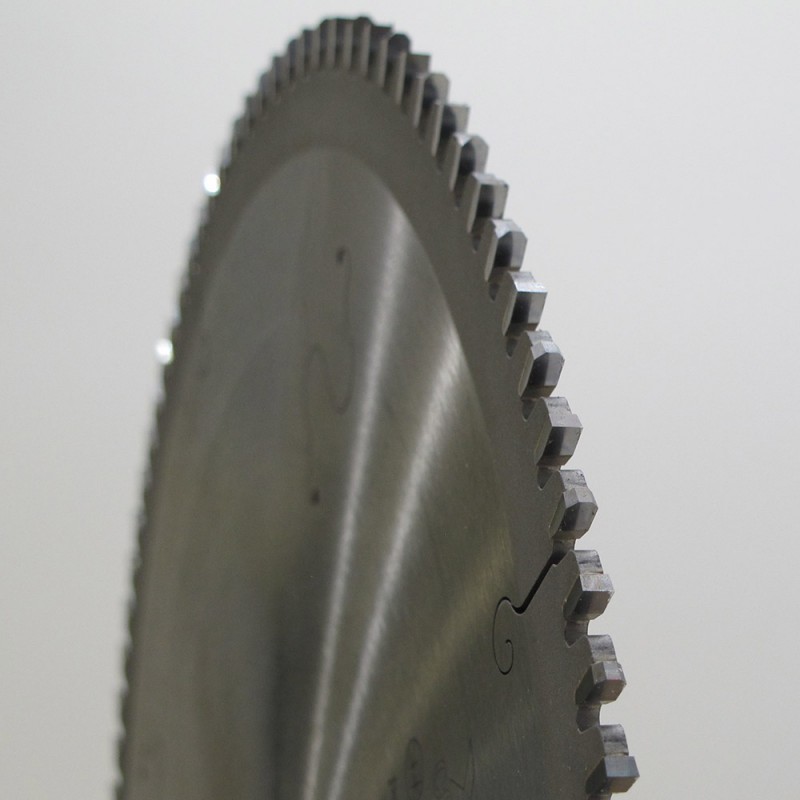
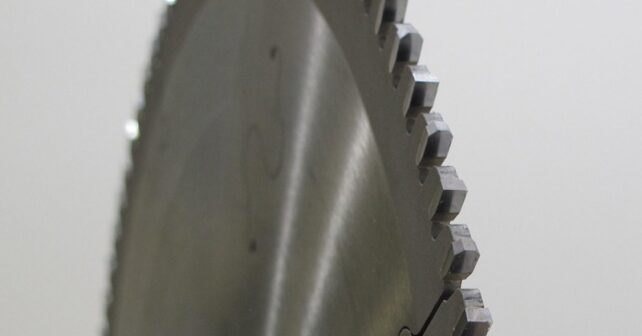
Core Factors for Selecting a PCD Saw Blade
1. Blade Diameter
The blade diameter is primarily determined by the specifications of your cutting equipment and the diameter of the aluminum rod.
· Principle: The blade diameter must be able to cut through the rod in a single pass with some allowance.
· Calculation Formula: Minimum Blade Diameter ≈ Aluminum Rod Diameter + Flange Diameter + Safety Margin (typically 10-20mm)
· Common Specifications:
· Small diameter rods (<100mm): Common diameters are 255mm, 305mm.
· Medium diameter rods (100-200mm): Common diameters are 355mm, 405mm.
· Large diameter rods (>200mm): Common diameters are 500mm, 610mm or larger.
· Note: Always ensure that your cutting machine’s spindle speed matches the maximum safe linear speed of the chosen blade diameter. A larger blade has a higher peripheral speed at the same RPM.
—
2. Tooth Shape
The tooth shape is critical for chip removal, cutting force, and cut quality. For cutting aluminum rods, the following two shapes are primarily recommended:
· A. Alternate Top Bevel (ATB)
· Feature: A positively angled tooth (for cutting) alternates with a flat or negatively angled tooth (for wiping/cleaning).
· Advantages:
· Excellent surface finish; the angled tooth cuts while the flat tooth smoothens.
· Moderate cutting force, good stability.
· High versatility, suitable for most solid aluminum rods and thick-walled aluminum tubes.
· Recommendation: This is the primary and most common tooth shape for cutting aluminum rods.
· B. Flat Top (FT)
· Feature: All tooth tips are flat.
· Advantages: High cutting force, large gullet capacity for chip removal.
· Disadvantages: Rough cut surface, may produce burrs.
· Application: Mainly used for rough cutting where surface finish is not critical, or for cutting very gummy aluminum alloys.
· C. Turbo Tooth
· Feature: Features wave-like gullets, similar to fan blades.
· Advantages: Extremely strong chip ejection, good heat dissipation.
· Application: Ideal for high-speed, high-efficiency, continuous cutting, and for cutting sticky, adhesive-prone alloys (like 6061). An excellent choice for fast production cycles.
Summary:
· For high-quality finish: Choose Alternate Top Bevel (ATB).
· For high efficiency and powerful chip removal: Choose Turbo Tooth.
· For rough cutting, burrs acceptable: Optional Flat Top (FT).
—
3. Number of Teeth
The tooth count directly affects cutting efficiency and surface finish.
· Principle: Fewer teeth mean larger gullets, higher efficiency, but a rougher finish. More teeth provide a smoother finish but require better chip ejection to avoid overheating.
· Rule of Thumb: It is recommended that 2-4 teeth are engaged in the cut at any time. Too few can cause vibration, too many can cause chip packing.
· Specific Selection:
· Solid Aluminum Rods:
· Diameter <50mm: Choose a higher tooth count (e.g., 80-120 teeth) for a better finish.
· Diameter >50mm: Recommend a lower tooth count (e.g., 36-60 teeth) to ensure sufficient chip space and prevent overheating and material adhesion.
· Thin-walled Aluminum Tubes: Require more teeth for support to prevent chipping, typically 80 teeth or more.
—
4. PCD Tip Quality and Angles
· PCD Quality: PCD is sintered from diamond micropowder and a metal binder under high temperature and pressure. The diamond grain size, concentration, and binder type affect its wear resistance and toughness. Suppliers typically recommend the appropriate PCD grade for your material. For aluminum rods, a medium-grain, high-wear-resistant PCD is generally suitable.
· Rake Angle:
· Positive Rake Angle (e.g., 10°-15°): The standard for cutting aluminum. Provides sharp cutting, low resistance, smooth chip flow, and effectively prevents material from adhering to the tip.
· Negative Rake Angle: Generally not used for aluminum as it increases cutting force and heat generation.
· Gullet Design & Coating: Special gullet designs (e.g., polished gullets) and coatings (e.g., Teflon) can further reduce built-up edge (BUE), improving cut quality and blade life.
5. Blade Body
The blade body is the “backbone” of the saw blade, and its quality is crucial.
· Material: Must be made of high-strength alloy tool steel.
· Heat Treatment: Must undergo tensioning (hammering) and stress leveling. This ensures the blade maintains extreme stability during high-speed rotation, resisting centrifugal and thermal stress, preventing vibration and deviation, thereby guaranteeing cutting accuracy and straightness.
—
Selection Summary Table
Influencing Factor Options & Recommendation Application Scenario
Tooth Shape Alternate Top Bevel (ATB) Universal首选, clean finish, good all-around performance
Turbo Tooth High efficiency, continuous cutting, high chip removal demands
Flat Top (FT) Rough cutting, low surface finish requirements
Tooth Count Low (36-60T) Large diameter solid rods (>50mm), ensures chip removal
Medium (60-80T) Medium diameter rods, balances speed & quality
High (80-120T) Small diameter rods or thin-wall tubes, high finish required
Rake Angle Positive Rake (10°-15°) Mandatory option, ensures sharp cutting, prevents sticking
Blade Body High-Strength Steel, Tensioned Mandatory option, ensures cutting stability & straightness
Other Important Considerations
1. Cooling is Crucial:
· Must use cutting fluid! Especially for PCD blades. The fluid serves three core purposes: Cooling (prevents aluminum and blade from overheating), Lubrication (reduces friction and adhesion), Flushing (helps remove chips).
· Dry cutting will quickly cause chips to melt and stick to the tips (built-up edge), rendering the blade instantly ineffective and damaging the workpiece.
2. Machine Condition:
· Ensure your cutting machine has a high-precision spindle with no play.
· When installing the blade, ensure the flanges are clean and the arbor nut is tightened securely.
· Select an appropriate feed rate. Avoid too fast or too slow. Too fast overloads the blade, too slow generates excessive friction heat.
3. Consult Professionals:
· The best approach is to provide detailed cutting information to a reputable blade supplier:
· Aluminum alloy type (e.g., 6061, 7075)
· Aluminum rod diameter
· Cutting machine model and spindle speed
· Cutting requirements (wet/dry, priority on efficiency/quality)
· They can provide the most precise selection advice.
In summary, the selection path for a PCD blade for cutting aluminum rods is: Determine Diameter → Prefer Alternate Top Bevel (ATB) → Select moderate tooth count based on rod diameter → Ensure Positive Rake Angle and high-quality tensioned body → Always use with sufficient cutting fluid.